Schrank
West Side StorySchrank is a New York City police lieutenant whose dealings with the Jets make law enforcement part of the same hostile street environment it is meant to control. He can issue orders, threaten force, and intrude into private spaces, but his policing is marked by a fatalistic view of people and open contempt for Puerto Ricans. The contrast between his official power and his reliance on ethnic insults makes him a figure through whom the novel exposes how authority can reinforce the antagonisms it claims to manage.
Position and Policing Worldview
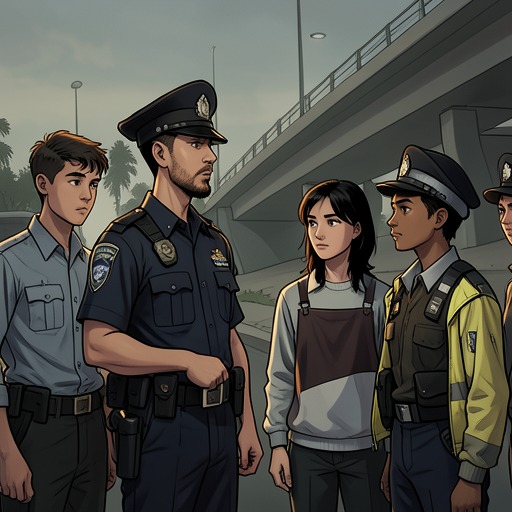
Schrank has spent thirty years in the police. Experience has hardened his features and formed a fatalistic philosophy: he regards everyone as corrupt, yet believes troublemakers must be eliminated and beaten into submission. His outlook is not detached from his methods. He threatens to punish any young person he catches moving, singles out A-Rab for mockery, and treats physical intimidation as an ordinary instrument of order. Officer Krupke, beside him in the patrol car, joins in the threats, but Schrank is the senior officer who sets the encounter’s terms.
His authority operates in a neighborhood already shaped by crowding, deteriorating housing, and fear of street violence. The narrative describes residents who avoid confronting the Jets because the gang is associated with trouble, while political leaders remain distant from the West Side’s hardships. That context does not excuse the Jets’ violence; it clarifies the conditions in which Schrank’s blunt use of force and the gang’s defiance meet. He enforces control over the street without addressing the deprivation and ethnic hostility surrounding it.
Orders to the Jets
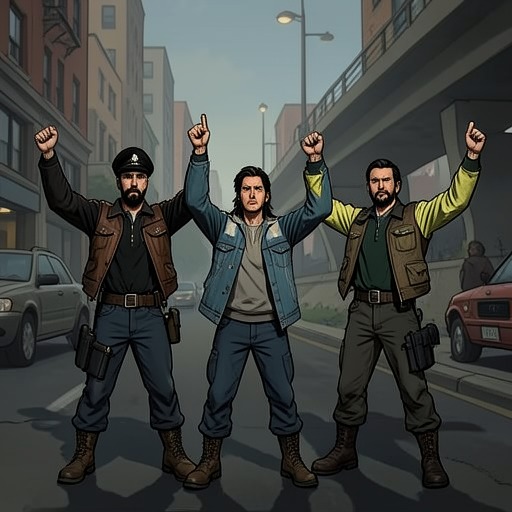
When Schrank and Krupke confront the Jets, Riff approaches the patrol car and holds its door shut while greeting the officers. The maneuver buys time for Mouthpiece, who has fled with knives, brass knuckles, and bicycle chains hidden in his pocket. Schrank wants to know who ran. Riff, however, keeps the exchange on the officers and their purpose in the neighborhood, while the gang presents itself as merely out for a walk.
Schrank tells Riff that the street does not belong to the gang. He says the police have warned both the Jets and the Puerto Ricans about the raids and explosions between them, then orders the Jets to remain on their own block and stop obstructing the sidewalk. The restriction is an exercise of police power, but it also makes the gang’s territorial existence explicit: the young men are told where they may go, not given any larger way out of the conflict. Action answers the order with sarcasm about being unable to go to work; Schrank’s intervention provokes mockery rather than compliance.
Racial Hostility and the Proposed Fight
Later, Schrank enters a gathering where Riff has stopped Bernardo from advancing toward him. He reads the scene as a war council, in line with information Glad Hand has given him, and tries to identify where the Jets and Sharks intend to fight. He initially presents himself as an ally in cleaning up the streets, asking whether the fight will take place by the river, in the park, or at another familiar battleground. When no one answers, his appeal gives way to rage: he threatens to drag the boys to the station and uses slurs against them and their immigrant families.
Schrank’s handling of Bernardo makes the contradiction especially clear. He tells the Puerto Rican boys to leave, acknowledging that he cannot legally order them out of a free country but asserting that his badge will make them obey in practice. He directs them out of the room and warns them not to linger in the street. His language turns an exercise of selective authority into a declaration of ethnic exclusion: he invokes legal limits while making clear that coercive power can override them on the ground.
When Action reacts angrily to Schrank’s insults, Riff and Gee-Tar restrain him. Schrank waits with his hand on his nightstick, ready to strike, then backs toward the door while warning the gang that he will find them wherever they fight. He tells them, in effect, to kill one another before he arrives, threatening to finish the job himself if they do not. The scene presents his threat as more than a response to immediate disorder: he treats gang violence as something to be exploited against the gangs, even as his own taunts intensify the confrontation.
The Search for Maria
After Bernardo’s death, Schrank bursts into the Nunez home while Maria and Anita are preparing to leave. He moves quickly through the kitchen, bathroom, and another room, looking around before closing the kitchen door and questioning Maria. When she asks where she can go to see her brother, he dismisses the request and insists on asking his questions first. Anita points out that Maria’s brother is dead, but Schrank cuts her off and asks whether Maria attended the dance at the foyer that night.
Schrank follows Maria down the building stairs and says that there was a fight over a young man. She answers that it was another man from her country. The exchange shows him converting a personal catastrophe into an investigative lead: Maria is grieving and trying to find out where her brother is, while Schrank presses her about the events that preceded the violence. His swift search and questioning establish the reach of police scrutiny, but the evidence does not show him offering comfort or explaining what happened to Bernardo.
Narrative Role
Across these encounters, Schrank’s conduct shifts between regulation, provocation, and investigation. He imposes a block-by-block restriction on the Jets, attempts to uncover the planned fight, uses ethnic insults against Puerto Ricans, and enters Maria’s home to question her after Bernardo’s death. His thirty years of service and his belief that everyone is corrupt help explain his hardened approach, but they do not make his actions neutral: he enforces order through threats while speaking in terms that deepen the divisions he confronts. The resulting irony is central to his role. Schrank stands for the city’s formal authority, yet his own words and methods echo the exclusion and violence that make the neighborhood dangerous.